Wireline Simulator
Wireline Training Simulator
Train pressure-control rig-up, deployment, depth and tension management, malfunctions, isolation and recovery on a live well model. Available on every Endeavor deployment.
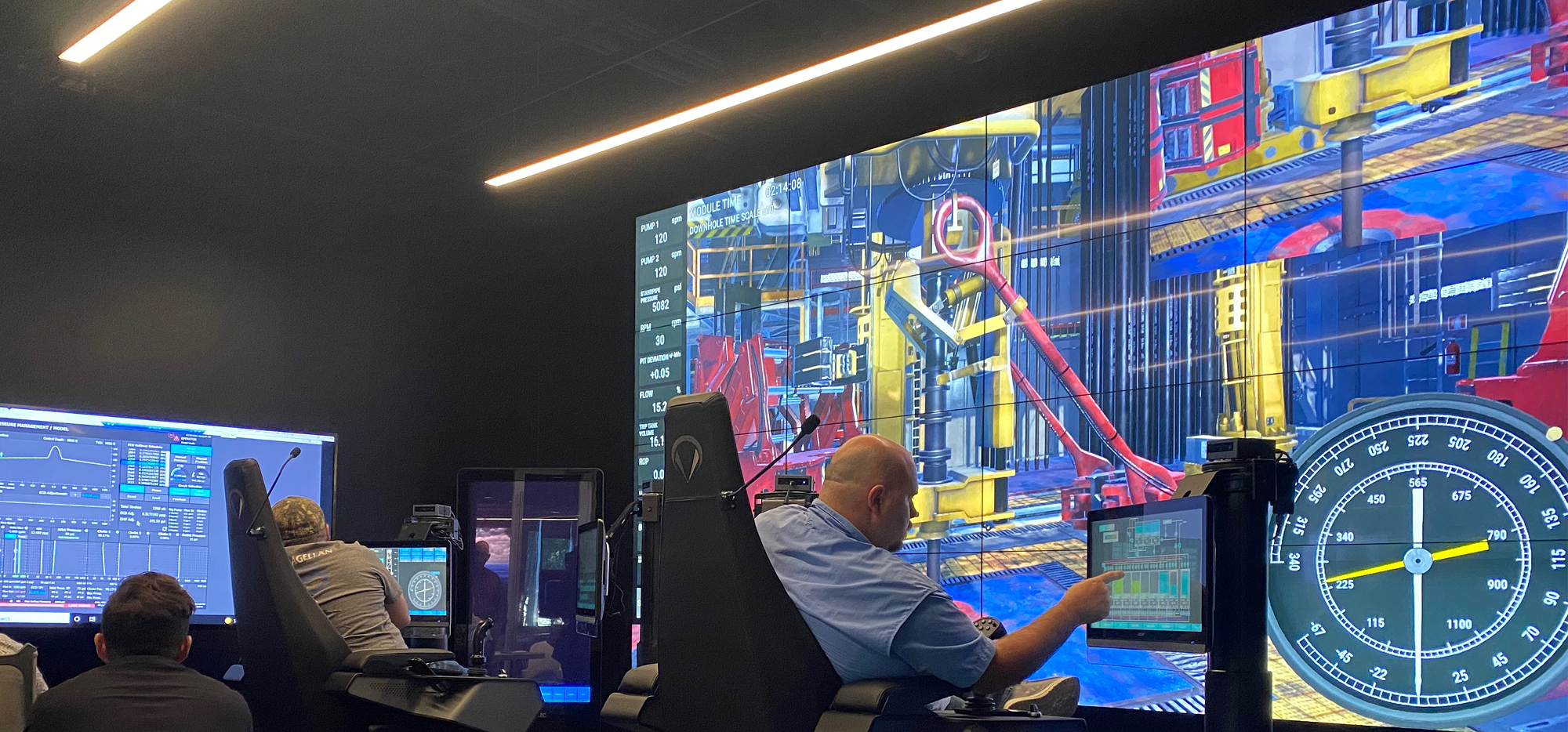
E-line + slickline
Two intervention modes, one persistent well state.
5–10k psi
Category 3 pressure-control envelope in the delivered scope.
Instructor-led
Timed malfunction injection and recovery assessment.
Operational wireline
What You Can Train
Pressure-control rig-up, E-line and slickline deployment, depth and tension management, logging and perforating workflows, barrier verification, malfunctions, isolation, and recovery.
01 · RIG UP
Surface geometry and PCE
Configure tool-string length, lubricator stack, crane clearance, MASP class, and shear-seal requirements.
02 · DEPLOY
RIH, POOH, and intervention
Track line movement, depth, tension, tool weight, gauge runs, logging, perforating, and well response.
03 · SECURE
Barrier and isolation logic
Validate tree alignment, lubricator equalization, ram sequencing, wire cut, pressure bleed, and zero-energy state.
Malfunctions + CRM
Failure & Recovery Training
Instructor-controlled faults change real pressure, weight, leakage, and energy state. Technical recovery runs in parallel with role-based evaluation of awareness, communication, decision making, and leadership.
→ Explore Well Intervention SimulatorLEAK
Pressure-control failure
Grease injection or stuffing-box leakage with required ram and bleed sequence.
LINE
Parted wire / tool drop
Weight loss, pressure change, tree isolation, and secured-well response.
RAMS
Below-ram leak
Emergency blind/shear response, wire cut, and zero-energy verification.
CRM
Recovery scoring
Timed fault injection with technical and human-factor assessment.
Explore the technology behind wireline training.
For the simulation engine, research, technical evidence, and advanced engineering behind these training systems, explore EndeavorTech.com.
Build the program
Build wireline confidence under pressure.
Configure E-line, slickline, equipment, failure timing, role structure, and assessment criteria around your operating standard.