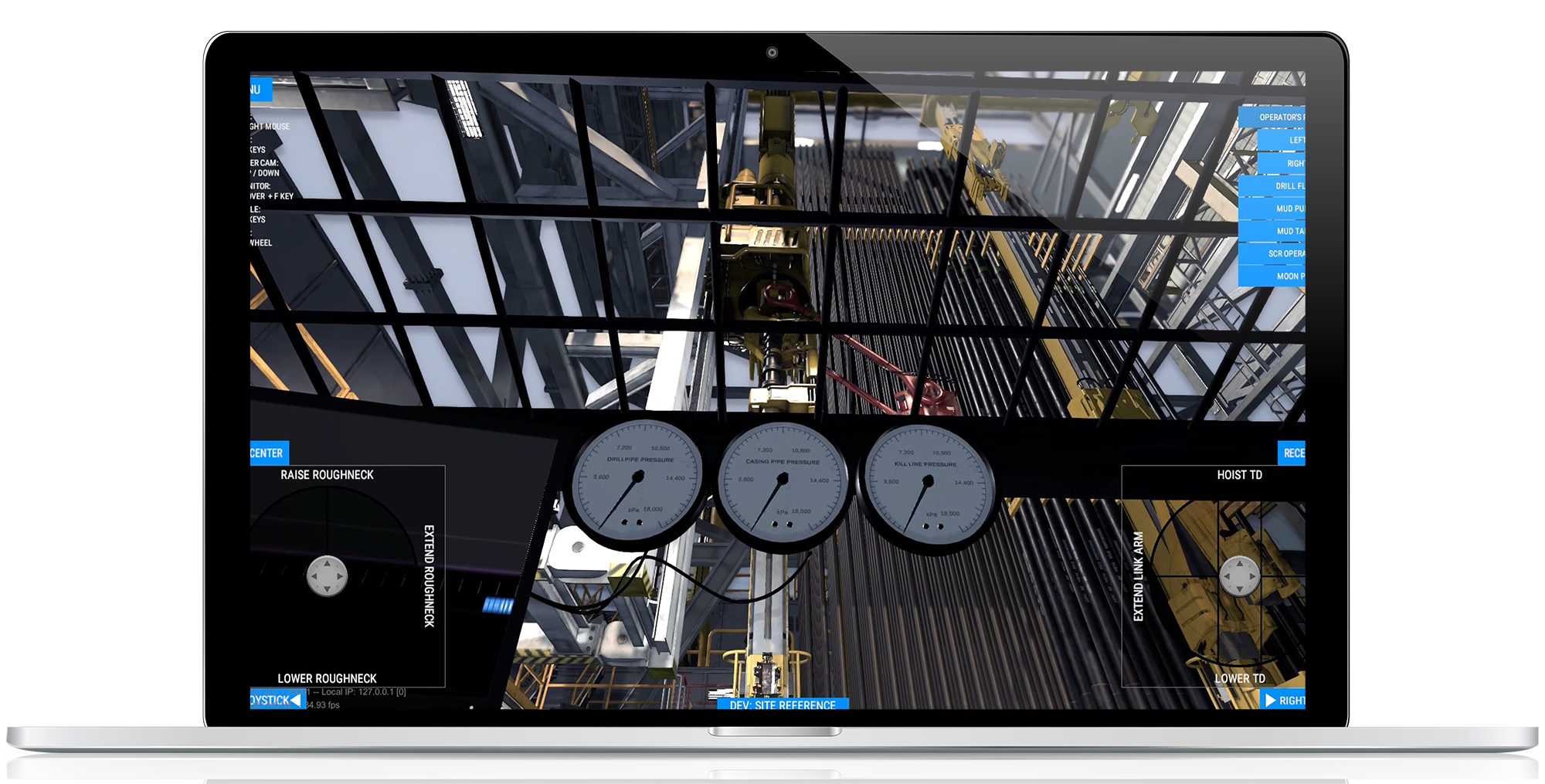
Practice connections, tripping, circulation, and changing well conditions. Bring drilling and well control into the same training program, from online exercises to full-scale crew rehearsal.

START HERE
Choose drilling, well control, or combine both. Build individual confidence first, then bring the crew together around shared procedures and decisions.
Practice routine drilling operations, connections, tripping, hydraulics, hole cleaning, torque and drag, and equipment response.
Practice kick detection, shut-in, circulation, recovery, barrier decisions, and IADC/IWCF-aligned workflows.
Give new personnel a safe way to understand equipment, flow paths, and operating context.
Run routine drilling and well-control steps with virtual controls or connected hardware.
See how each decision changes pressure, flow, equipment state, and downhole conditions.
Download Immersive Simulator BrochureRun drilling and well control exercises online, on a workstation, or with portable and full-scale controls. Expand the training environment as your team’s requirements grow.


Access Drilling and Well Control simulators from a supported device without dedicated simulator hardware.
Explore Endeavor.One →

Run individual, instructor-led, or classroom exercises from a portable workstation.
Explore Workstation →

Move multi-station Drilling and Well Control training between classrooms, worksites, and operations.
Explore X3 →

Add physical controls and multiple displays for operator-focused practice in a compact footprint.
Discuss X2 →

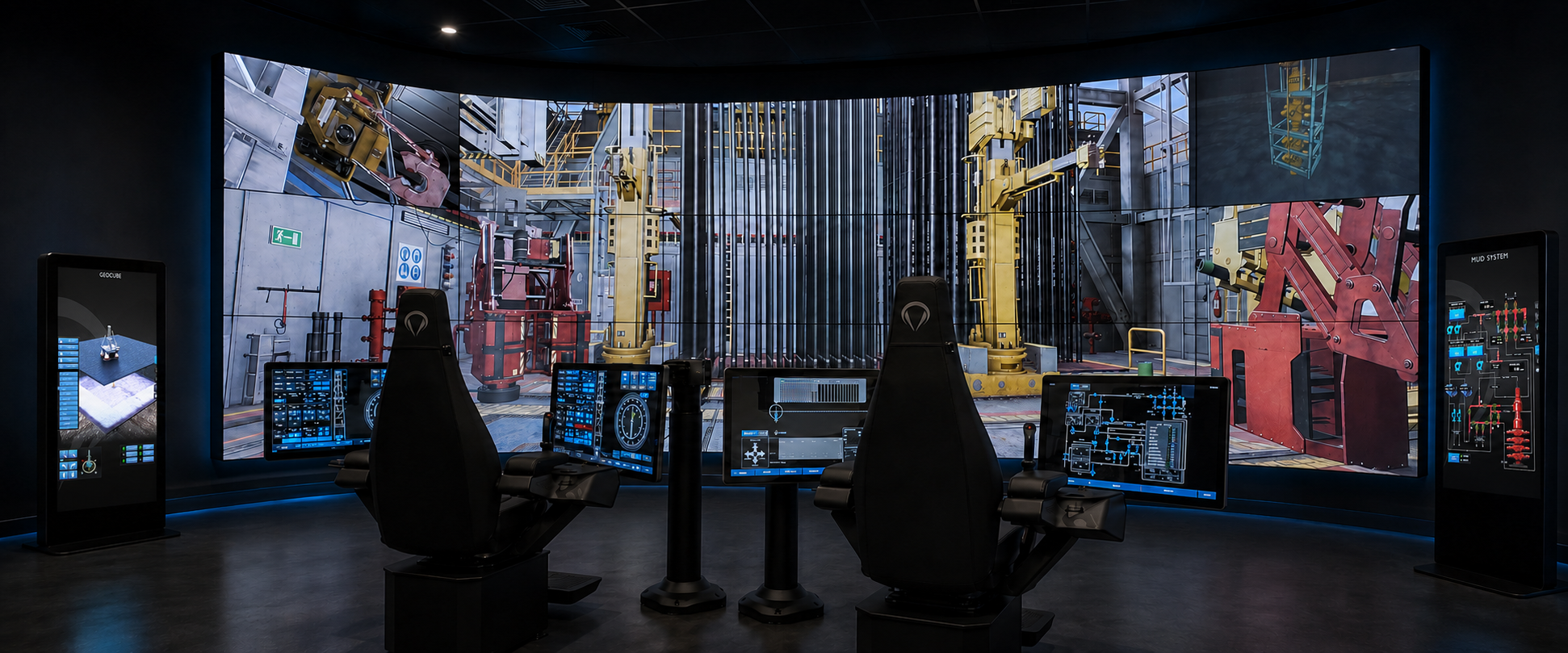
Train a complete crew together with multi-station controls and full-scale operational rehearsal.
Explore X1 →

Bring teams together for instruction, assessment, and collaborative scenarios in a purpose-built environment.
Explore the Center →Explore focused simulators for managed pressure drilling, subsea MPD, and CO₂ well control. These specialist paths stay available without getting in the way of the core choice.
Train connections, tripping, influx and loss response while maintaining the pressure window.
Train riser-level control, subsea pump response, losses, influxes and deepwater pressure management.
Train CO₂ influx detection, containment, circulation and response using CO₂-specific fluid behavior.
Tell us what you need to simulate and how you plan to deploy it. We’ll recommend the right configuration and next step.