01 · State
Continuous Pressure & Barrier State
Pressure, flow, influx, fluids, barriers, and equipment state persist through the complete well-control event.

Train kick detection, shut-in, circulation and recovery with IADC-approved content. Available online, on workstations, or on full-scale hardware.
IADC lists Endeavor Well Control Simulation among its approved simulation providers for WellSharp Live instructional and assessment requirements. Confirm the applicable course requirements and simulator configuration with your training provider.
LEARN · TEACH · PRACTISE
Practical resources for instructors, training centres and learners. Explore Endeavor simulator guides alongside well control learning materials from IWCF and IADC.
ENDEAVOR HOW-TO VIDEO · 42 MINUTES
The Day 1 drilling simulator tutorial introduces the HMI, pumps, gain and loss alarms, trip tank, BOP and choke controls, pressure propagation, and results export. Use it for interface familiarisation before instructor-led well control simulator training.
Watch the Day 1 simulator tutorial →
Pumps, gain/loss alarms and trip tank controls →
BOP, choke controls and pressure propagation →
Debriefing and results export →
This introductory walkthrough explains the simulator interface. Practical well control procedures and competency assessment belong within your instructor-led training program.
ENDEAVOR · BUYER’S GUIDE
Compare online, workstation, X1, X2 and X3 options for your instructors, learners and training space.
Read the selection guide →
ENDEAVOR · INSTRUCTOR GUIDE
Explore instructor grading, autograding, exercise review and debriefing for drilling and well control training.
Explore simulator assessment →
ENDEAVOR · TRAINING PLANNING
Compare portable, workstation, online and full-scale systems to match your course delivery and classroom needs.
Compare deployment options →
IWCF · FREE COURSE
Start with IWCF’s Level 1 introduction to well control, drilling and well intervention. Registration is required.
Explore the IWCF course ↗
IWCF · OPEN REFERENCE
Look up terminology used in drilling well control and well intervention programmes. No registration is needed.
Open the IWCF glossary ↗
IADC · PROGRAMME INFORMATION
Review IADC’s WellSharp programme, frequently asked questions and accredited training-provider directory.
Visit IADC WellSharp ↗
IWCF and IADC resources are provided by those organisations. Course access and registration are managed on their websites.
Practice kick detection, shut-in, choke control, circulation, stripping, bullheading, and recovery with instructor-led scenarios for individual or crew training.
Begin with online or workstation access. Add tactile controls, portable stations, or a full-scale room as your training requirements grow.
Access well-control exercises online with a configuration matched to your learners and connection.
Explore Endeavor.One →Run full-fidelity planning, validation, and forensic analysis from a laptop-class system.
Explore Workstation →Purpose-built multi-station hardware for full-scale crew interaction and operational rehearsal.
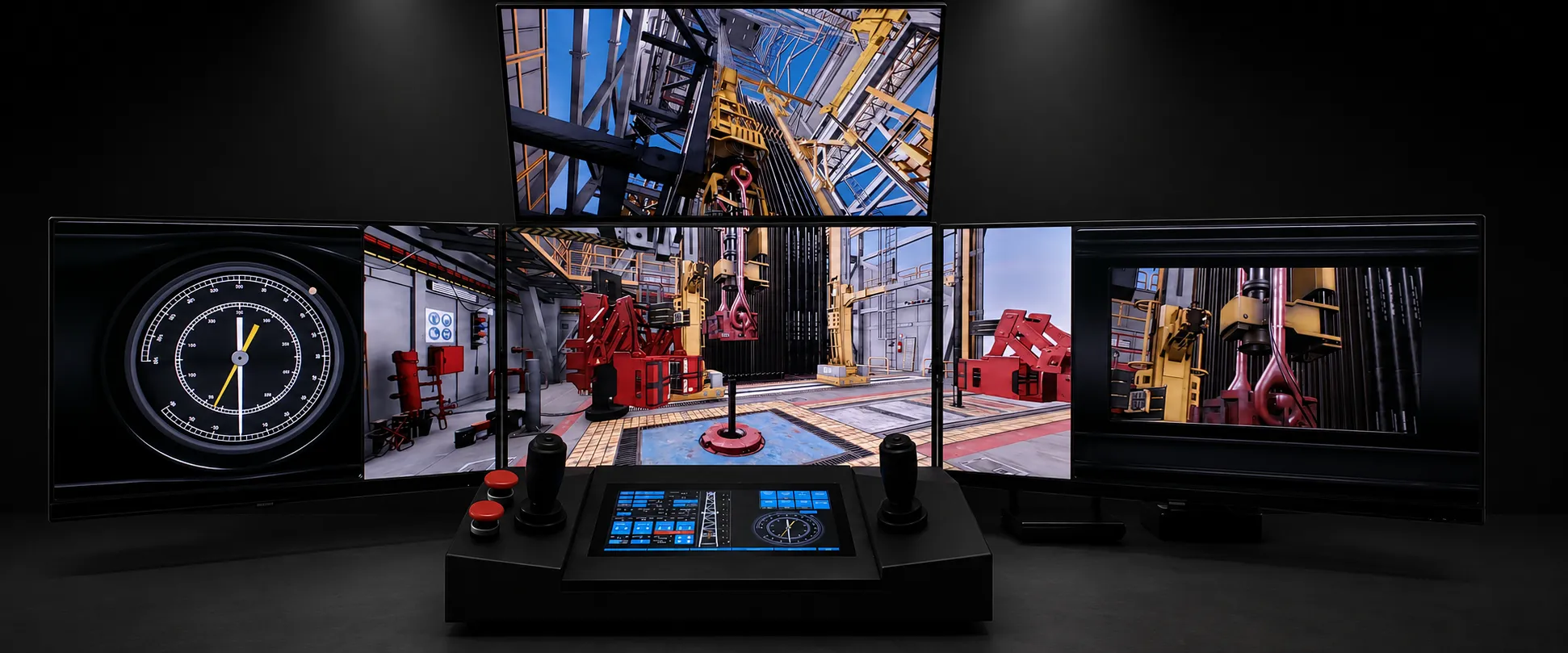
Explore X1 →A semi-permanent cyber-chair simulator with four high-resolution displays, dual touch interfaces, and realistic joystick and switch controls.
Discuss X2 →Portable multi-station simulator hardware that moves from case to operation in minutes.
Explore X3 →Multi-user instruction, assessment, and collaborative workflows in a purpose-built environment.
Explore the Center →Select IADC-approved simulator content and IWCF-aligned workflows for individual practice, classroom instruction, and crew exercises.
Explore RuntimePhysics™ >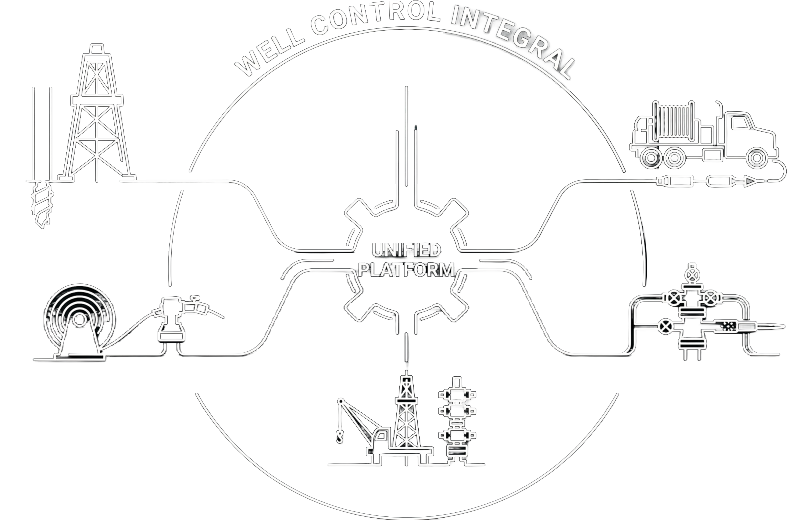
Use the simulator for accredited coursework, crew competency, procedure rehearsal, refresher training, and advanced well-control exercises across onshore, offshore, and subsea programs.
Go beyond basic coursework with pressure-control failures, gas migration, stripping, choke and manifold operation, CO₂ influxes, and crew decision-making scenarios.
Pressure, flow, influx, fluids, barriers, and equipment state persist through the complete well-control event.
Shut-in, choke, pump, circulation, and recovery actions change the running physics and preserve their consequences.
Driller, supervisor, instructor, and connected controls work from the same authoritative pressure and barrier state.